Jun 26, 2026 ● Roger Lear
What Orlando Employers Need to Know About AI and Hiring After SHRM 2026
Five takeaways for Orlando and Florida employers
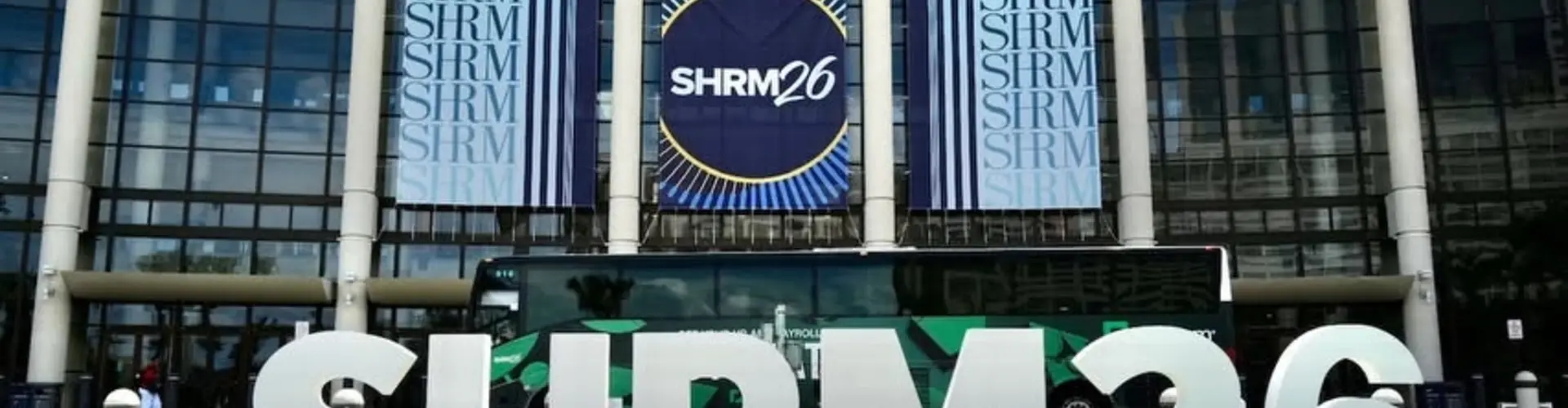
After spending time at SHRM 2026 in Orlando, one thing became very clear to me: hiring is changing fast, but not in the scary way everyone keeps talking about.
Yes, AI was everywhere. Every booth, every session, every demo, and every hallway conversation seemed to have some kind of AI angle. But here is my biggest takeaway for employers in Orlando and across Florida:
AI is not replacing hiring teams. It is exposing broken hiring processes.
And let’s be honest, some of these problems have been around for a long time.
Slow response times. Candidates applying and never hearing back. Hiring managers taking too long to make decisions. Recruiters buried in administrative work. Great people falling out of the process because nobody followed up fast enough. Employers wondering why they cannot find talent while qualified candidates are sitting in the pipeline waiting for an answer.
None of that is new.
AI is just making it harder to ignore.
Top 5 things I learned about AI and hiring
- AI is not replacing talent acquisition, but it is exposing broken hiring systems.
- Candidate communication is still one of the biggest problems in recruiting, and AI can help fix it fast.
- Recruiters need to become stronger talent advisors, not just resume screeners or job posters.
- The companies that win will use AI to improve human connection, not remove it.
- Employers can use AI to find bottlenecks, move faster, and create a better hiring experience.
For Florida employers, this matters a lot. We are in a labor market where companies still need great people, but job seekers are more selective, more distracted, and more frustrated than ever. In Orlando, Miami, Tampa, Jacksonville, Fort Lauderdale, Fort Myers, Tallahassee, and every community in between, the employers who communicate faster and make hiring easier will have a major advantage.
The best use of AI is not just writing better job descriptions or saving a few minutes on emails. That is helpful, but that is not the real game changer.
The real power is using AI to keep candidates moving. AI can help answer basic candidate questions, schedule interviews, send reminders, organize resumes, summarize notes, identify where candidates are dropping off, and help hiring teams see what is slowing everything down.
That alone can make a huge difference.
If a great candidate applies today and does not hear back for three or four days, you may have already lost them. That person may have applied to five other companies, talked to another recruiter, or taken a job before your team ever gets around to the first response.That is not a talent shortage problem. That is a process problem.
And AI can help fix that.
One of the best examples I heard came from a session with Tim Sackett, where he shared how Valvoline is using AI and recruiting technology in its hiring process. For certain roles, their talent acquisition team is using technology so effectively that TA can make final hiring decisions without managers having to interview every single candidate. That is a huge shift. It saves managers time, speeds up hiring, creates a more consistent process, and, according to the example shared, is helping improve retention.
The big lesson is not that AI should take over hiring. The lesson is that employers should use AI where it makes sense.
For Orlando and Florida employers, this could apply to many high-volume or process-driven jobs, including customer service, sales, hospitality, healthcare support, call center roles, entry-level administrative jobs, warehouse positions, accounting support, insurance jobs, and many other roles that keep companies moving every day.
Think about the amount of time lost in hiring because of poor communication, slow screening, missed follow-up, and managers who are too busy to move candidates forward. AI can help clean that up.
But here is the important part. AI should not make hiring less human. It should remove the junk so your team can be more human where it matters most.
Recruiters still need judgment. Hiring managers still need to understand talent. Employers still need to sell the opportunity. Culture still matters. Leadership still matters. Trust still matters. AI can help you move faster, but it cannot replace the human part of hiring that makes someone want to work for your company.
The future of recruiting is not less human.
If we do this right, it may actually become more human than ever. I walked out of last week even more convinced that while TA jobs may look different in the next couple years, I think they will be upgraded to be more human, not setting 20 ghost inteviews each week!